Turkey teeth: worth the risk?
Quick answer
Is getting 'Turkey teeth' abroad worth the risk?
'Turkey teeth' treatment usually means crowns or veneers placed on eight or more teeth within days — and the enamel drilled away to fit them never grows back.
The British Dental Association reports dentists regularly see returning patients with infections, nerve damage and bite problems, and the General Dental Council cannot regulate overseas clinics. At York House Dental Practice in West Byfleet, composite bonding starts from £200 per tooth, porcelain veneers from £850, and smile packages from £2,995 on 0% finance.
Why is dental treatment abroad so much cheaper?
The appeal is price. Full-arch crowns are advertised abroad at roughly £180–£280 a tooth, or £3,500–£7,000 for a full set, against £500–£900+ per tooth in the UK. But fitting that many crowns quickly usually requires grinding down teeth that are often healthy, and the flights, hotel and any revision treatment belong in the real total.
What can go wrong with a full set of crowns abroad?
The clinical risk is irreversibility. Heavy drilling can expose nerve tissue — turning a cosmetic job into root canals (from £525 here) or extractions. Poorly matched bites strain the jaw joint, and if something fails months later, no UK practice is contractually obliged to repair another clinic's work for free.
What are the safer alternatives in the UK?
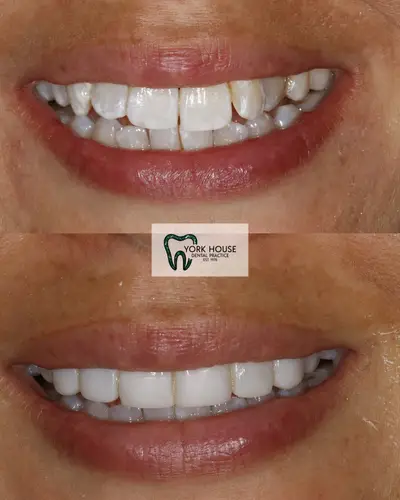
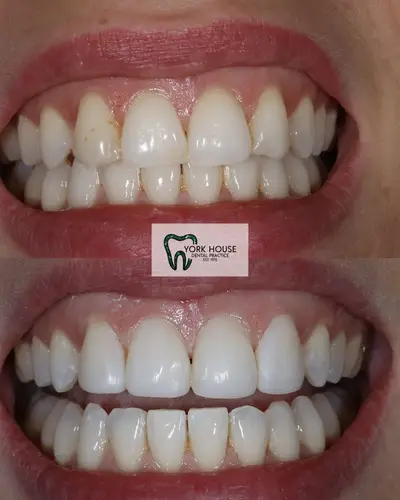
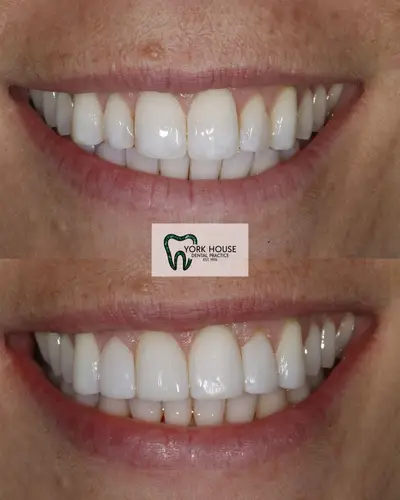
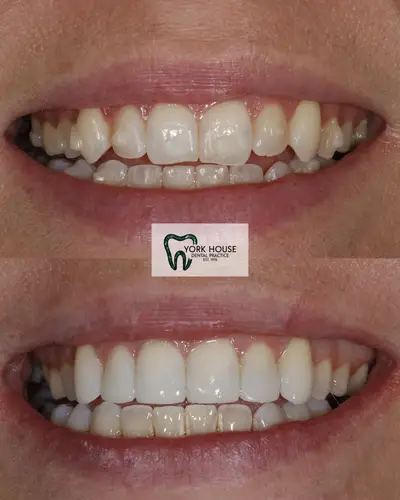
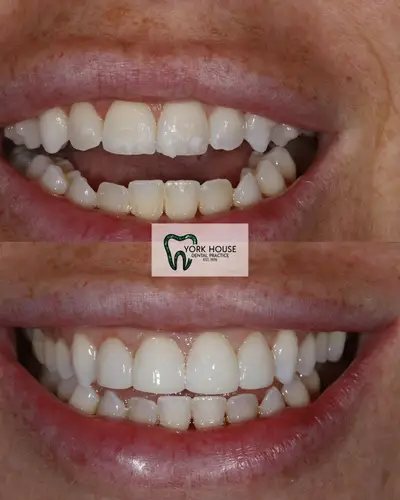
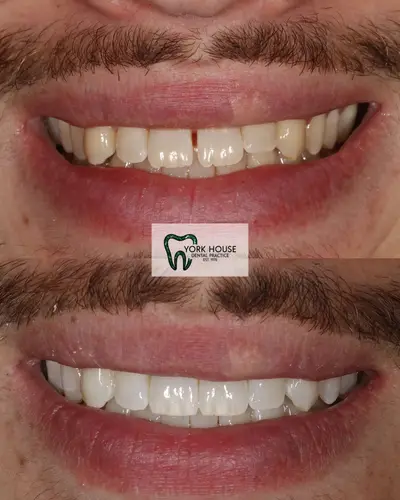
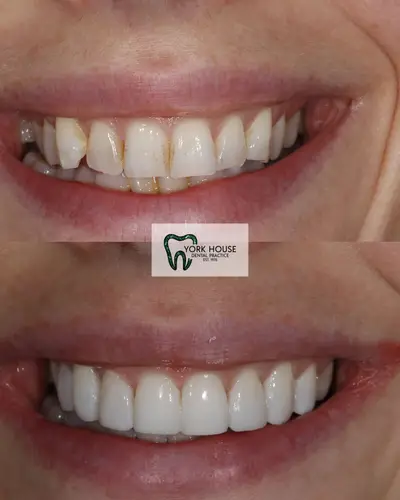
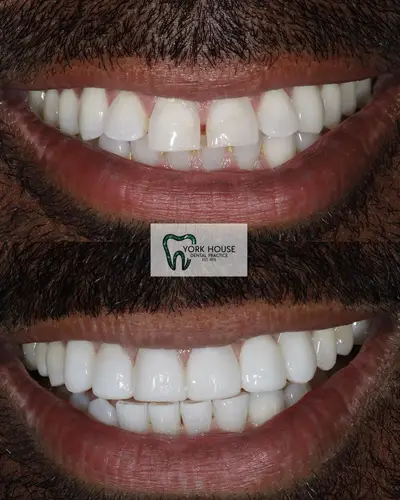
The safer route preserves your enamel. Composite bonding (from £200 per tooth) rebuilds shape without drilling, porcelain veneers (from £850) remove a fraction of the tooth structure of full crowns, and smile design packages combine whitening, aligners and bonding from £2,995. Spread the fee over 12 months at 0% APR — see dental finance — before you book flights.
Care at York House Dental Practice
Welcoming new patients, families and emergency appointments from West Byfleet, Woking, Weybridge, and across Surrey.
Last reviewed: by Dr Kaveet Patel, Principal Dentist