Composite Bondingin West Byfleet
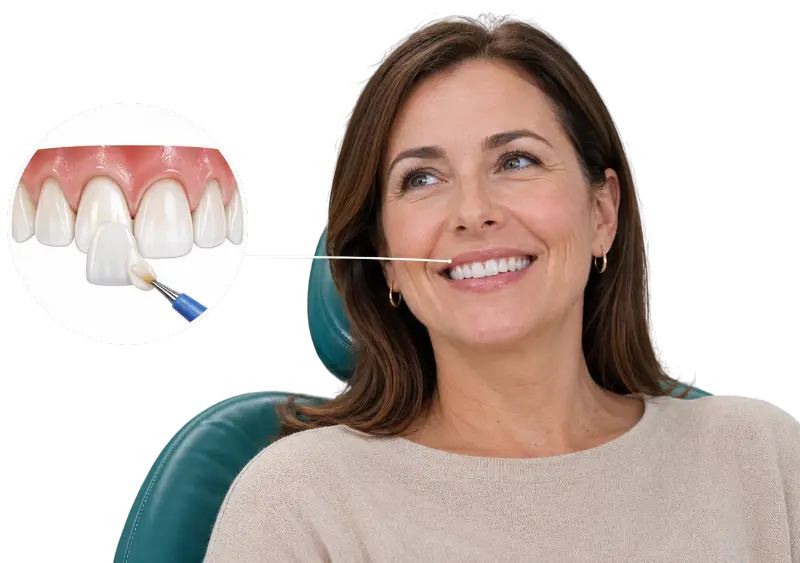
Composite bonding repairs chips, closes gaps, and reshapes teeth using tooth-coloured resin — often completed in a single visit. A conservative alternative to veneers with no enamel reduction.
 Google Rating
- BDA
- GDC
- CQC
- Invisalign®
- Enlighten Smiles
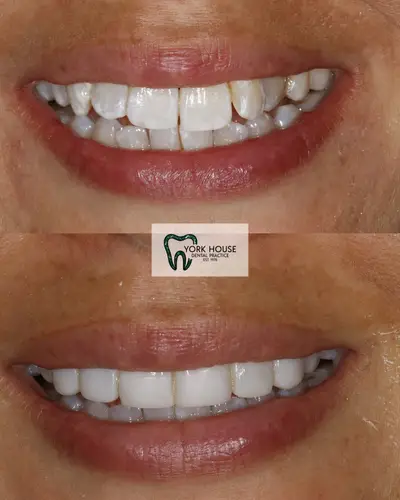
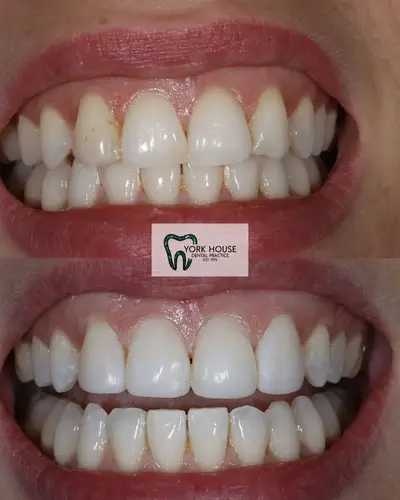
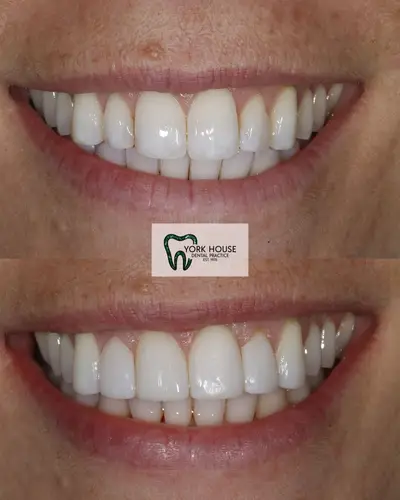
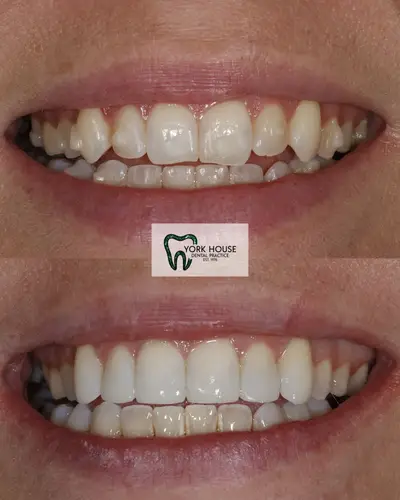
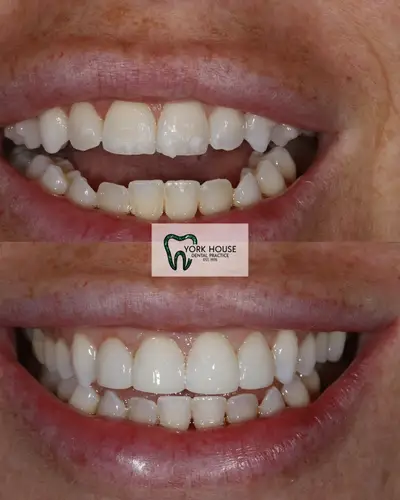
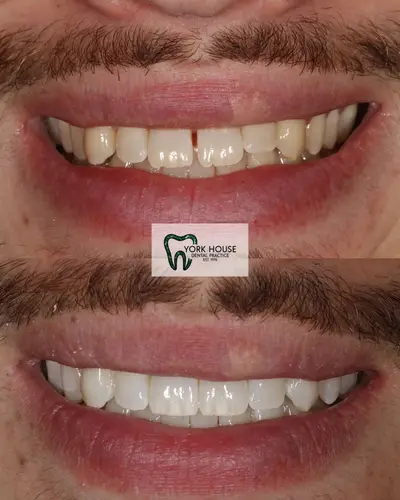
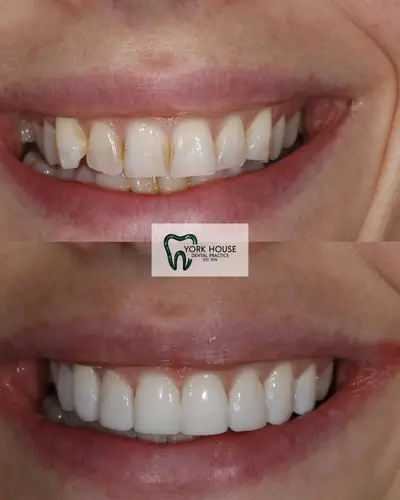
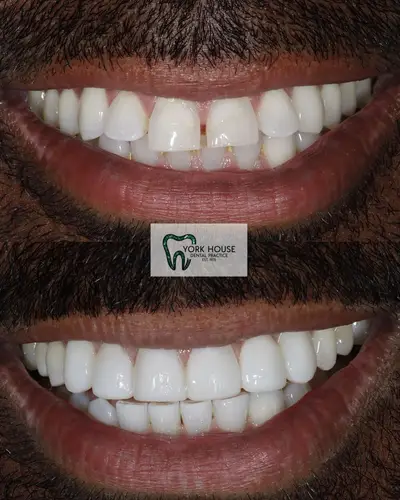
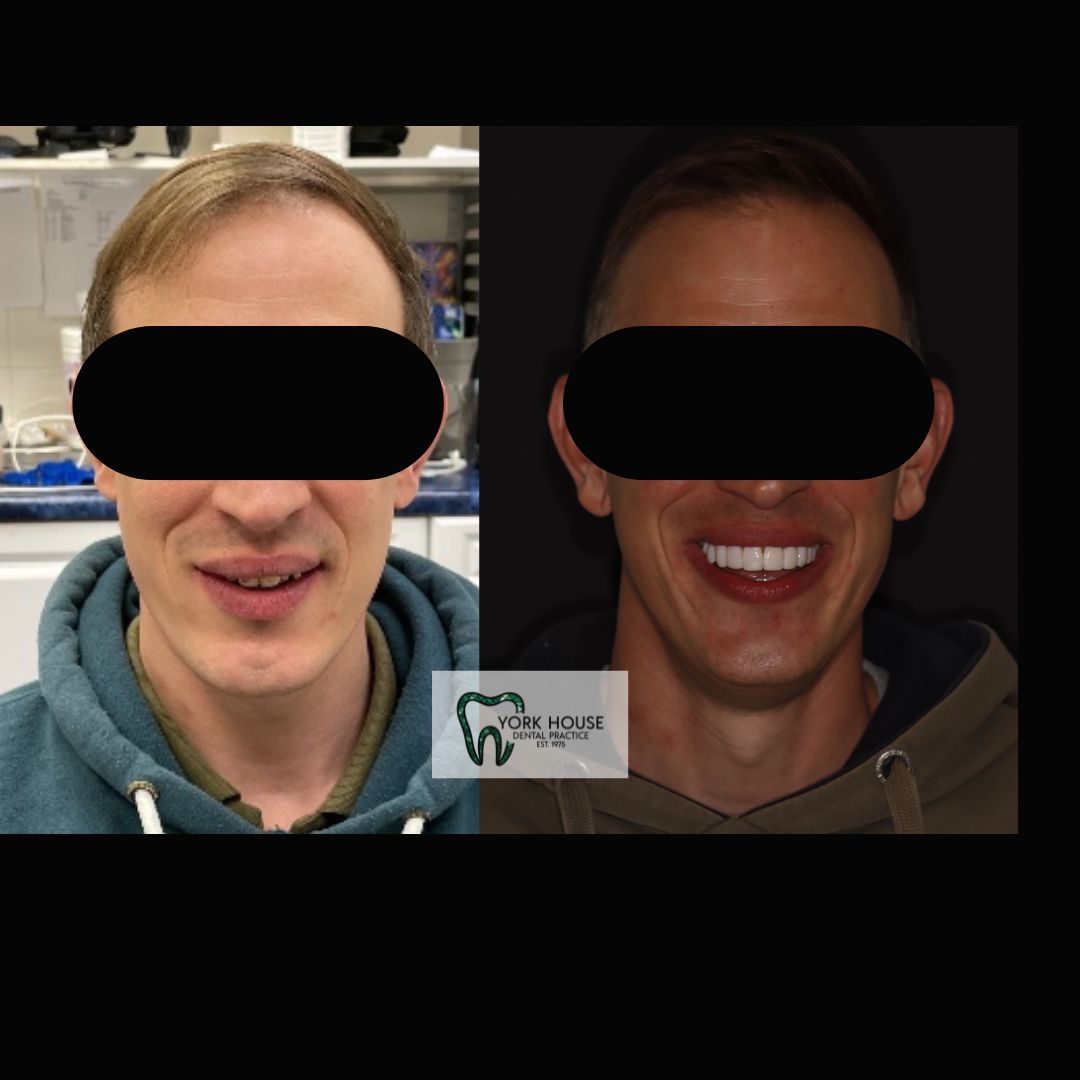
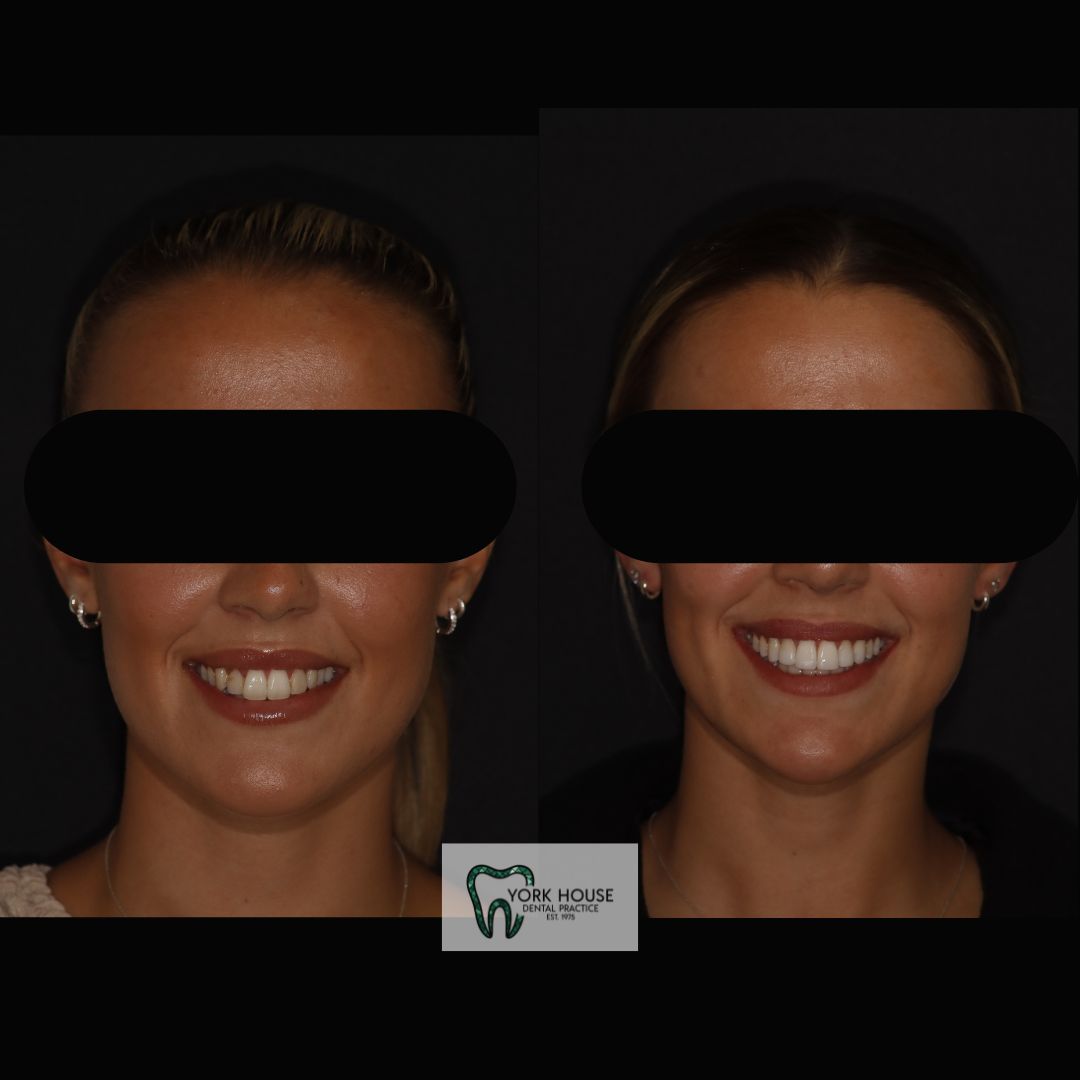
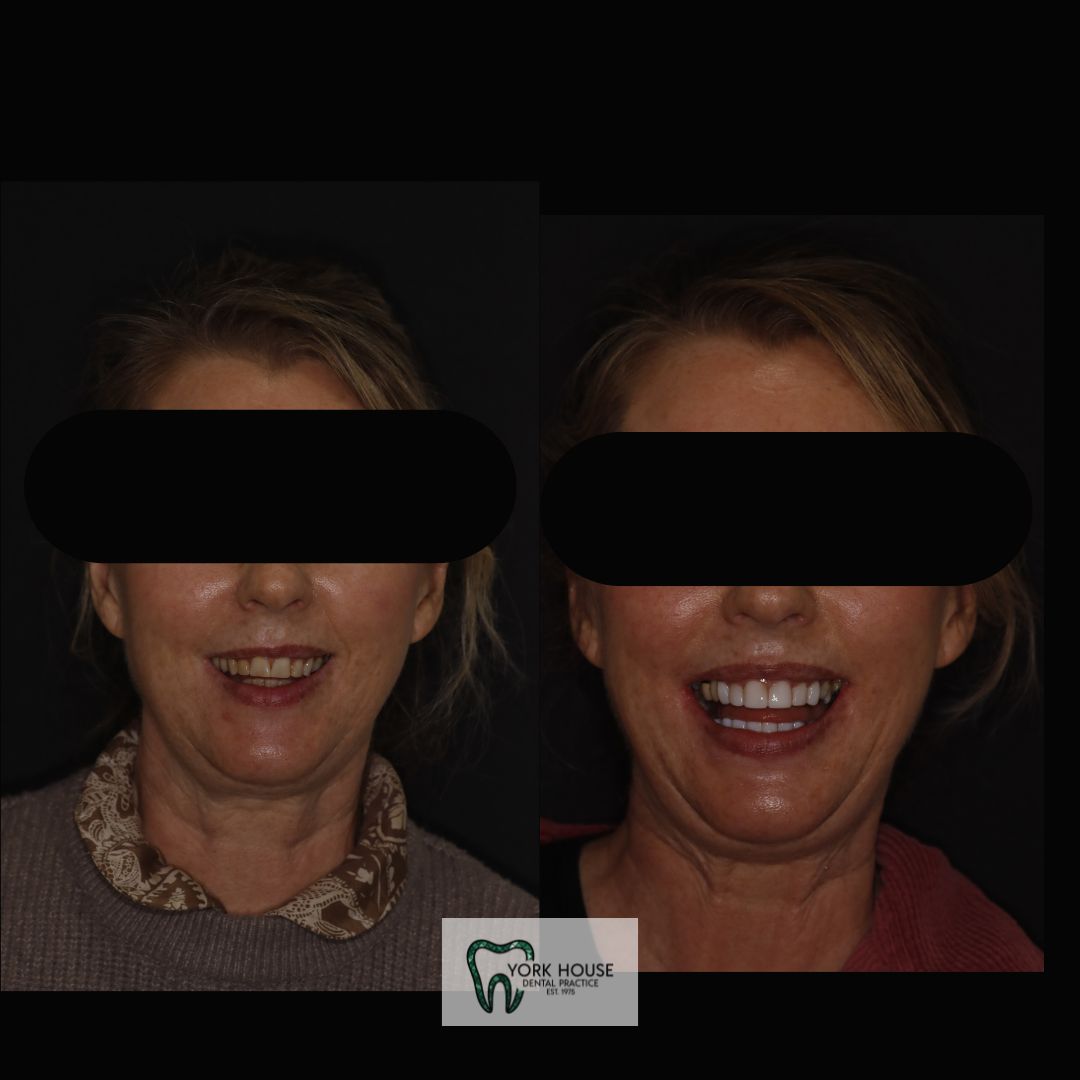
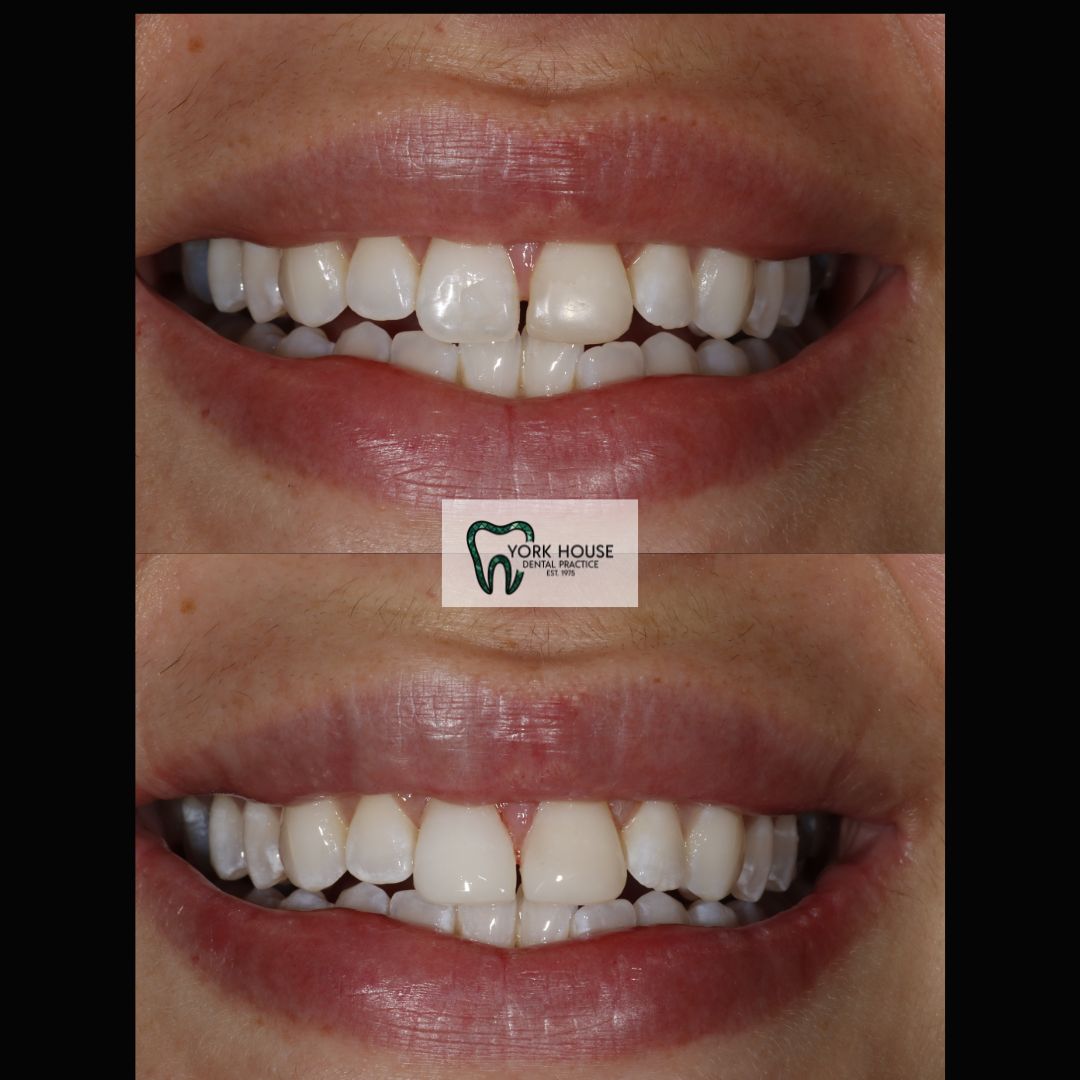
Bonding and smile cases
Drag the slider to compare each case. Results vary; your dentist will talk through what is realistic for you.
Composite Bonding at a Glance
A Conservative Way to Transform Your Smile
Composite bonding is one of the most straightforward and gentle cosmetic dental treatments available. Using a tooth-coloured resin material — the same kind used for white fillings — your dentist carefully sculpts and bonds the composite to your tooth surface to repair damage, close gaps, or reshape teeth.
Unlike porcelain veneers or crowns, composite bonding requires little or no removal of your natural tooth enamel. This means the treatment is typically reversible and preserves the long-term health of your teeth.
At York House Dental Practice in West Byfleet, our experienced clinicians use composite bonding to help patients across Surrey achieve natural-looking smile improvements — often in a single afternoon appointment.
The Benefits of Composite Bonding
Minimally invasive
Composite bonding requires little to no removal of your natural tooth enamel. In most cases, the procedure is entirely reversible.
Same-day results
Unlike porcelain veneers or crowns, composite bonding is completed in a single appointment. Walk out with your new smile the same day.
Natural appearance
Your dentist carefully layers and shapes the composite resin to match the colour, translucency and contours of your natural teeth.
Affordable option
Composite bonding typically costs less than porcelain veneers or crowns, making it an accessible way to improve your smile.
Easy repairs
If the bonding chips or becomes damaged over time, it can be repaired or touched up quickly — often in a single visit.
Conservative treatment
Because bonding adheres directly to your tooth, there is no need for crowns or significant preparation of healthy tooth structure.
What Composite Bonding Can Fix
Composite bonding is a versatile treatment that addresses a range of common cosmetic concerns. Your dentist will assess your individual situation and recommend whether bonding is the right option for you.
Chipped or broken teeth
Small chips and fractures can be rebuilt with composite resin, restoring both the appearance and the function of the tooth.
Gaps between teeth
Diastemas — the small spaces between front teeth — can be closed using carefully shaped composite restorations.
Discoloured teeth
Stubborn staining that does not respond to teeth whitening can be masked with a layer of tooth-coloured composite.
Uneven or worn teeth
Teeth that appear too short, worn down from grinding, or irregularly shaped can be built up and contoured with bonding.
Exposed roots
Gum recession can leave tooth roots exposed and sensitive. Composite can cover these areas to reduce sensitivity and improve appearance.
What to Expect at Your Appointment
Consultation
Meet your dentist to discuss what you would like to change. They will examine your teeth, explain your options, and show you what composite bonding can realistically achieve.
Shade matching
Your dentist selects a composite resin colour that precisely matches your natural tooth shade — or shades, if you are treating multiple teeth.
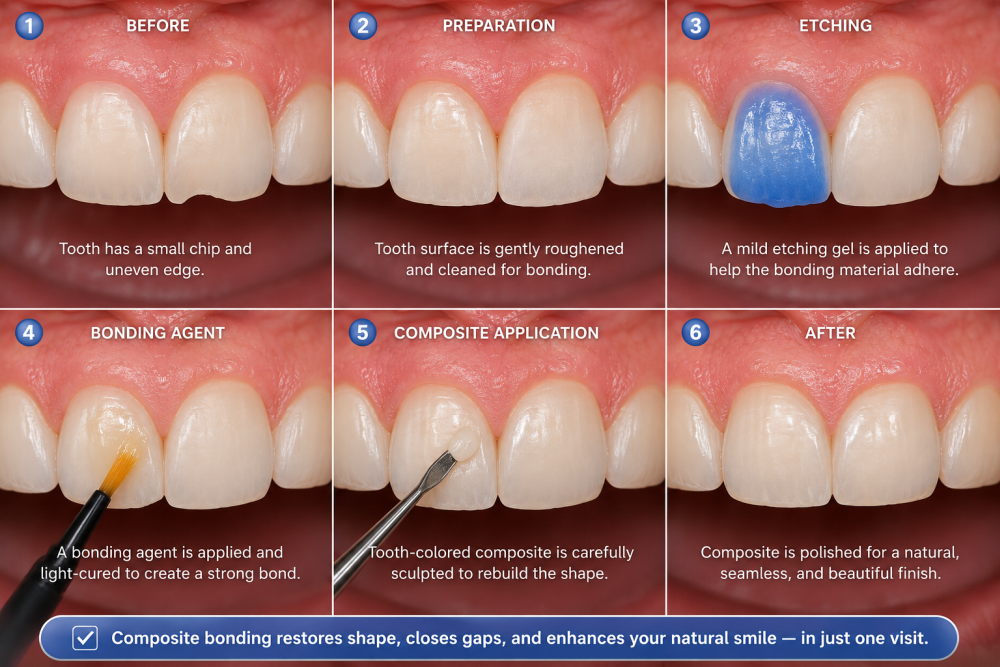
Preparation
The tooth surface is gently roughened and a conditioning liquid is applied. This helps the composite resin bond securely to your natural tooth.
Application & shaping
Layer by layer, your dentist applies the putty-like composite resin, sculpting it to the ideal shape for your tooth — filling chips, building out edges, or reshaping surfaces.
Curing
A special blue light hardens each layer of resin in seconds. Once the final shape is set, your dentist trims and polishes the bonding until it gleams naturally.
The Bonding Procedure In Action
Our dentists use advanced layering techniques and state-of-the-art materials to replicate the natural shine, color, and translucency of your teeth.
Composite Bonding vs Porcelain Veneers
Both treatments can dramatically improve the appearance of your smile, but they work differently. Here is how they compare.
| Feature | Composite Bonding | Porcelain Veneers |
|---|---|---|
| Material | Composite resin | Porcelain ceramic |
| Longevity | 5–7 years with care | 10–20 years |
| Appointments | Single visit | 2–3 visits |
| Tooth preparation | Minimal or none | Enamel reduction usually needed |
| Reversibility | Fully reversible | Not reversible |
| Stain resistance | Can stain over time | Highly resistant to staining |
| Cost | More affordable | Higher investment |
Not sure which option is right for you? Book a consultation and your dentist will give you an honest recommendation.
How Long Does It Last & How to Care for It
With good care, composite bonding typically lasts 5 to 7 years before it may need a refresh. The better you look after your bonding, the longer it will stay looking its best.
To help your bonding last:
- Brush twice daily with a fluoride toothpaste
- Floss between teeth every day
- Avoid biting on hard objects (ice, hard sweets, nutshells)
- Minimise staining foods and drinks, or rinse after consuming them
- Wear a night guard if you grind or clench your teeth
- Attend regular dental check-ups and hygiene appointments
When to have it touched up:
Over time, bonding may become slightly discoloured, rough, or show minor chipping. A polish or replacement is straightforward and can restore your smile quickly.
Arrange Your Bonding Check-up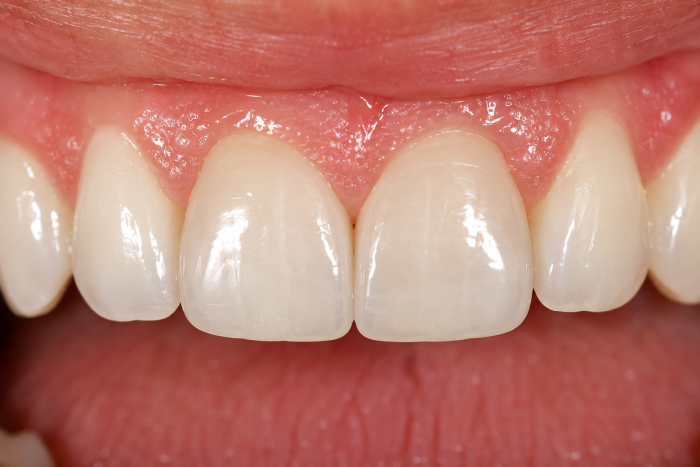
Why Patients Choose York House Dental
Experienced clinicians
Our dentists have years of experience in cosmetic bonding, regularly updating their skills through professional development.
Third-generation practice
Serving West Byfleet families for over 50 years, we take a long-term view — preserving your natural teeth wherever possible.
No-pressure consultation
We take time to understand what you want and give you an honest opinion about what bonding can realistically achieve.
Clear pricing
You receive a written quote before any treatment begins, with no hidden costs or surprises.
Expert Care at York House
Our experienced clinicians are trained in cosmetic bonding techniques and committed to achieving natural, beautiful results.


Composite Bonding FAQs
What is composite bonding?
How long does composite bonding take?
Does composite bonding hurt?
How long does composite bonding last?
Can composite bonding fix a chipped tooth?
What is the difference between composite bonding and porcelain veneers?
Can I whiten my teeth after composite bonding?
Does composite bonding stain?
How do I look after my composite bonding?
Is composite bonding suitable for everyone?
Can composite bonding fix gaps between teeth?
What does composite bonding cost in West Byfleet?
Composite Bonding Across Surrey
Patients from across Surrey travel to York House Dental Practice for composite bonding treatment. We welcome patients from Woking, Cobham, Weybridge, Addlestone, Sheerwater, Maybury, and the surrounding areas.
Ready to Transform Your Smile?
Book your free composite bonding consultation at York House Dental Practice. No obligation, no pressure — just an honest conversation about what bonding can do for you.
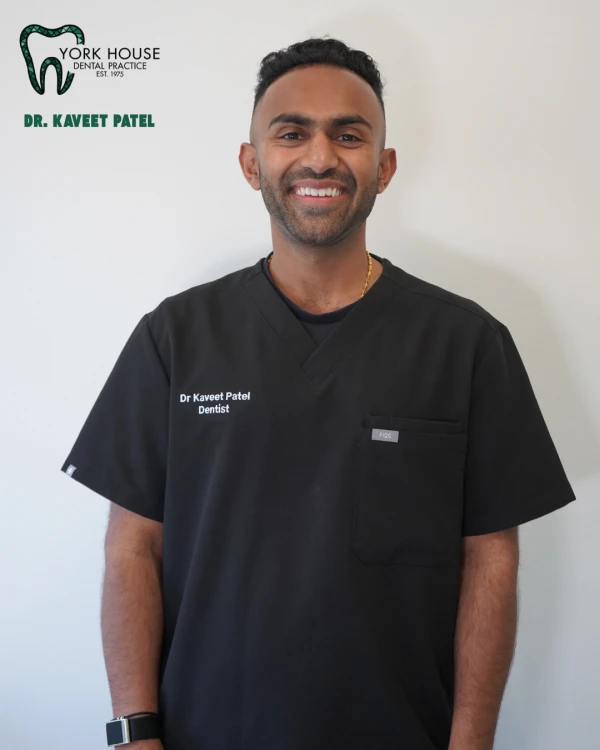
Last reviewed: by Dr Kaveet Patel, Principal Dentist
Cosmetic Dentistry Solutions
Explore complementary treatments to transform and brighten your smile.
- Learn more
Cosmetic Dentistry
Comprehensive aesthetic treatments tailored to enhance your smile.
- Learn more
Teeth Whitening
Professional Boutique home whitening for a brighter, natural shade.
- Learn more
Dental Veneers
Custom porcelain or composite shells for perfect shape and shade.
- Learn more
Invisalign® Clear Aligners
Discreet, removable clear aligners to straighten teeth comfortably.