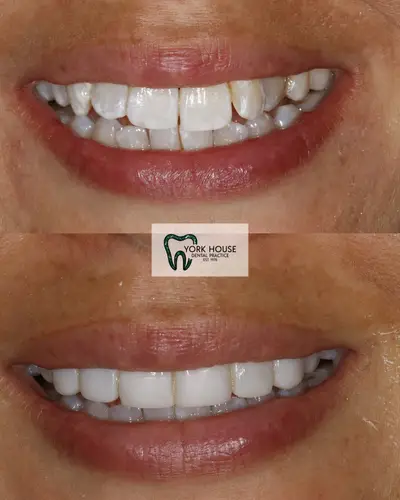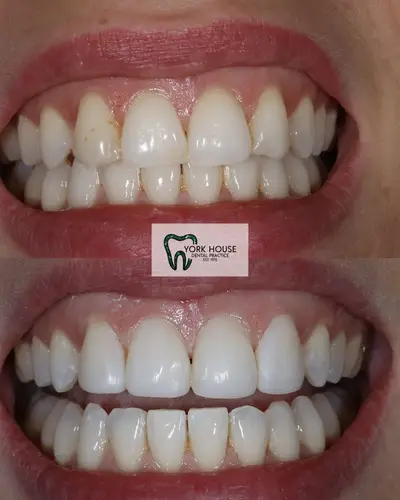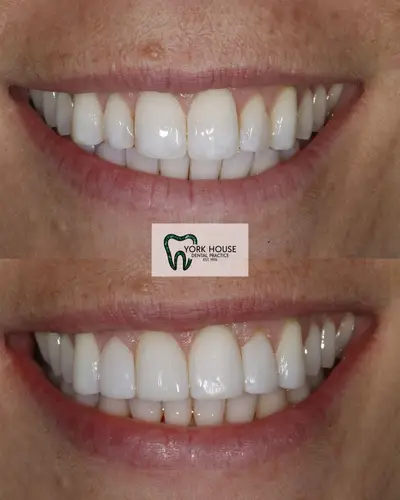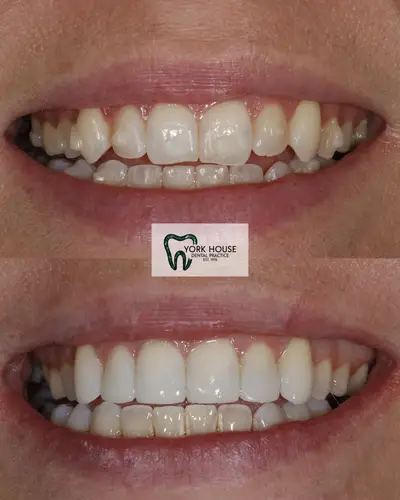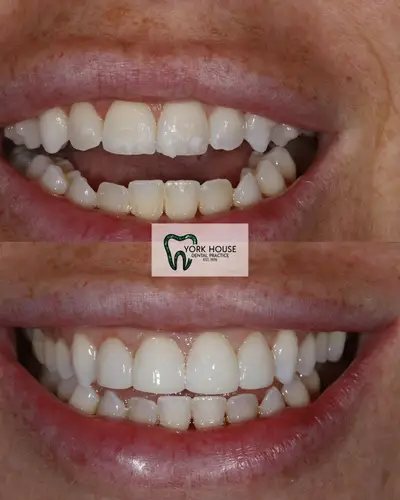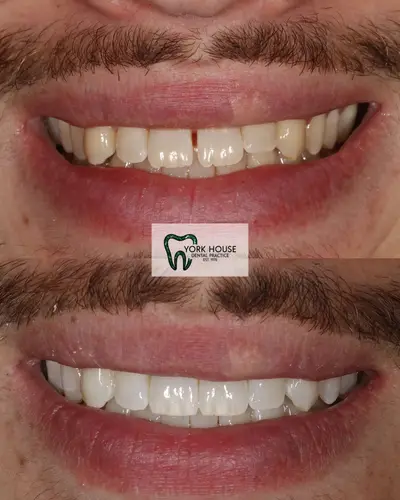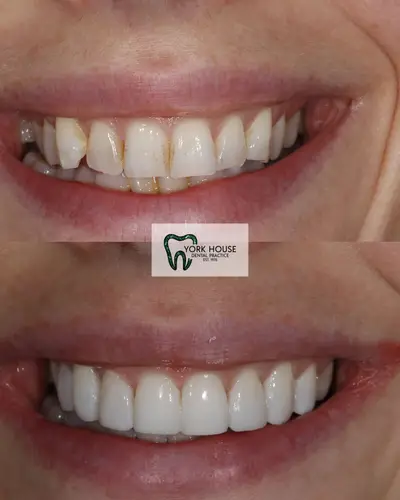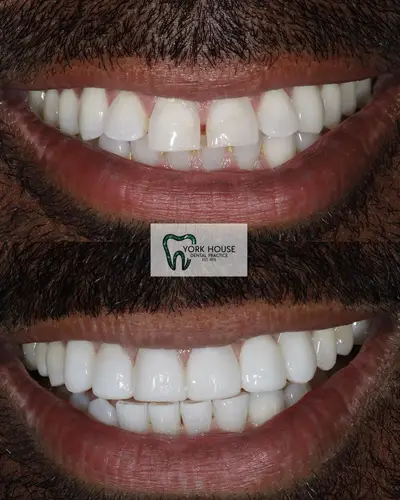
Composite edge bonding vs composite veneers
Quick answer
What is the difference between composite edge bonding and composite veneers?
Composite edge bonding restores chipped, worn, or uneven tooth edges by adding resin to the biting tip, preserving the rest of your natural enamel.
A full composite veneer covers the entire front surface of the tooth to transform its shape, size, and colour. At York House Dental Practice in West Byfleet, composite bonding starts from £200 per tooth.
What you need to know
Edge bonding is minimal-prep and conservative: resin is colour-matched and sculpted directly onto chipped corners or short teeth to create symmetry without shaving enamel. It works best if you are happy with the natural shade of your teeth but want to fix wear, chips, or small gaps.
Full composite veneers cover the entire visible facial surface of the tooth, making them ideal for teeth with deep intrinsic staining, surface irregularities, or uneven proportions across several teeth. Both treatments are completed in a single appointment without lab waits.
For patients seeking comprehensive smile transformation, our Smile Design composite package starts from £2,995 (or £249.58 per month over 12 months at 0% APR). If you want 10–15 year durability and stain resistance, laboratory porcelain veneers start from £850 per tooth.
Care at York House Dental Practice
Welcoming new patients, families and emergency appointments from West Byfleet, Woking, Weybridge, and across Surrey.
Last reviewed: by Dr Kaveet Patel, Principal Dentist