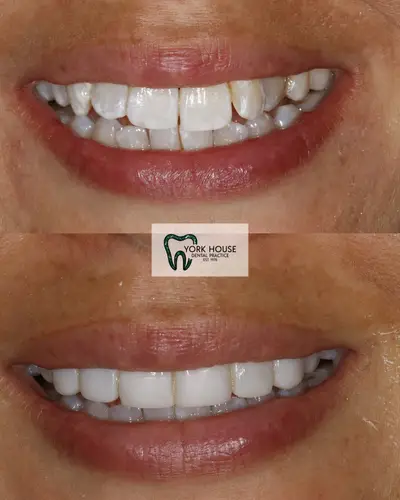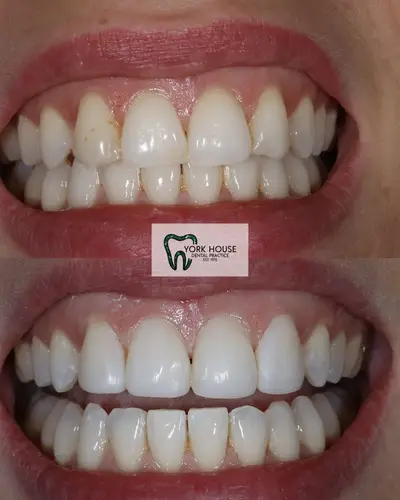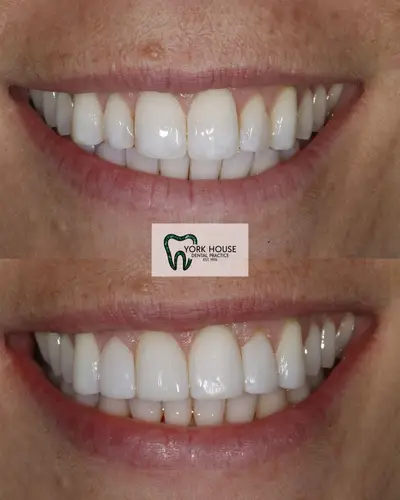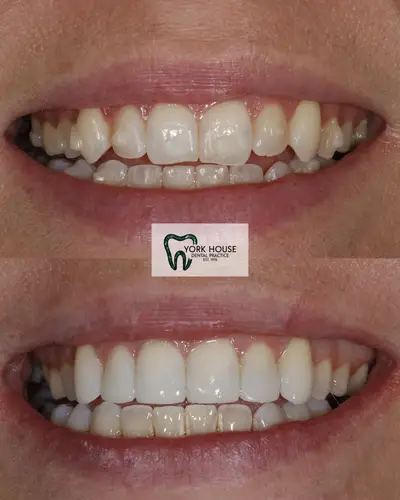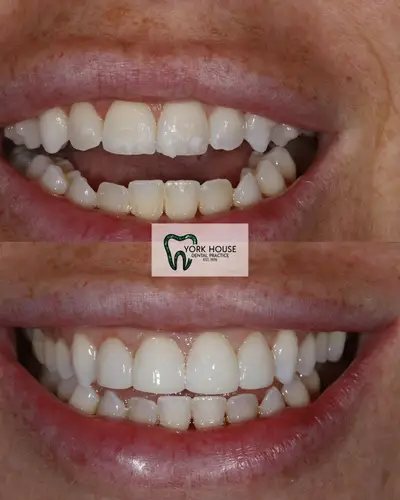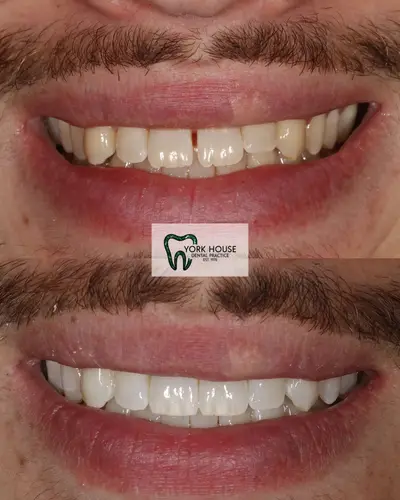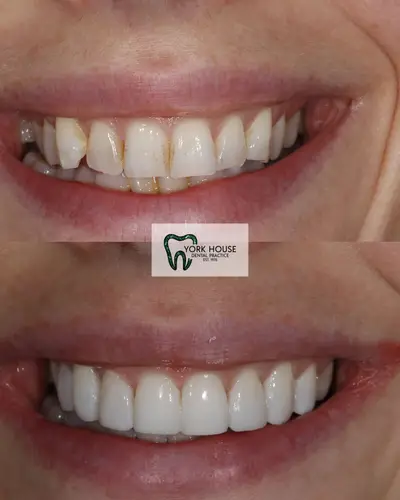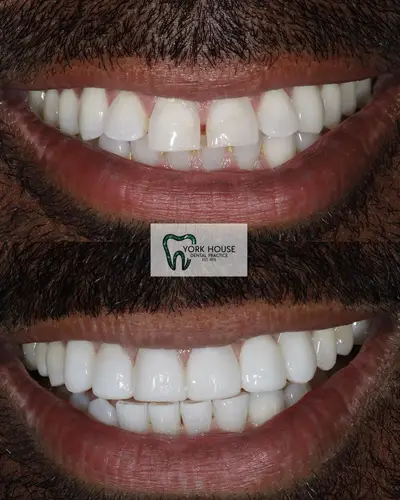
Black triangles after Invisalign
Quick answer
Why do black triangles appear after Invisalign, and what can help?
Black triangles are small spaces near the gumline between teeth that still touch higher up.
Straightening crowded teeth can reveal these spaces because of tooth shape, the position of the contact between teeth or reduced gum and bone support. The right response may be monitoring, carefully planned reshaping and tooth movement, or composite bonding. A dental assessment should establish the cause before any cosmetic correction.
How is a black triangle different from a gap between teeth?
With a black triangle, the teeth may meet normally near their biting edges, while the small gum triangle below the contact does not fill the space. A gap between the whole sides of two teeth, often called a diastema, is a different problem. Read our guide to closing a gap between teeth if that describes your concern.
Triangular tooth shapes, previous crowding and loss of supporting tissue can influence how a space looks. A photograph alone cannot show whether gum disease or another dental problem is contributing.
Does Invisalign cause gum loss?
A space becoming visible during alignment does not by itself mean that Invisalign has damaged the gums. Moving overlapping teeth into line can make an existing difference in tooth shape or gum support easier to see. Gum changes still need assessment, particularly if you notice bleeding, recession or a changing bite.
Your dentist may examine gum health, tooth contacts and previous photographs, and take X-rays if clinically needed. Where gum disease is present, periodontal treatment takes priority over covering the space. Our gum recession guide explains why lost tissue cannot be assumed to grow back.
Will black triangles go away on their own?
Their appearance may change as treatment progresses and the gums settle, but spontaneous closure cannot be promised. A stable, healthy space that does not trouble you may need no cosmetic treatment. Your treating dentist can advise when to judge the result and whether further treatment is reasonable.
Keep wearing aligners or retainers as prescribed while seeking advice. Do not file teeth yourself, alter trays or stop retention in an attempt to move the teeth together.
Can IPR or composite bonding reduce the space?
In selected cases, interproximal reduction (IPR) reshapes a small amount of enamel between teeth. Further planned tooth movement can then change the contact area and reduce a triangular space. Enamel removal is irreversible, and suitability depends on the tooth shape, enamel available, gum support and bite. Our attachments and IPR guide explains the procedure.
Composite bonding adds tooth-coloured resin to change the sides of suitable teeth. It may reduce the visible space, but it does not restore missing bone or gum tissue. The shape must allow cleaning, and resin can stain, chip or need maintenance. Neither approach is suitable for every space.
What should I ask before choosing treatment?
Ask what caused the space, whether gum health is stable, what improvement is realistic and how each option would affect your teeth and cleaning routine. Discuss any extra appointments, fees, ongoing maintenance and whether a retainer will need replacing after a shape change.
At York House Dental Practice in West Byfleet, an Invisalign assessment can address these concerns before treatment. If you are already wearing aligners, raise a new space with your treating clinician at your next review; contact them sooner for pain, swelling, persistent bleeding or a loose tooth.
Sources and further reading
University Hospitals of Leicester describes triangular spaces after adult orthodontic treatment and possible options in its patient leaflet on having braces fitted. The British Orthodontic Society explains the importance of assessment and treatment planning in its clear aligner information. These resources support a discussion with your dentist about your own teeth.
Care at York House Dental Practice
Welcoming new patients, families and emergency appointments from West Byfleet, Woking, Weybridge, and across Surrey.