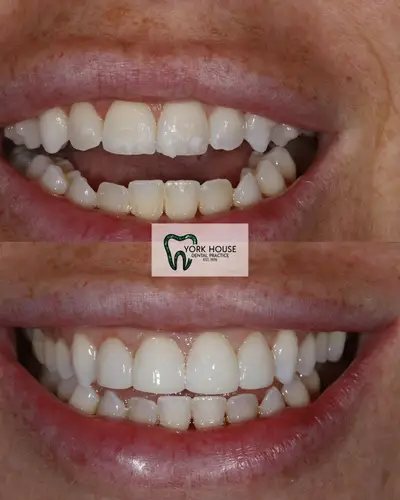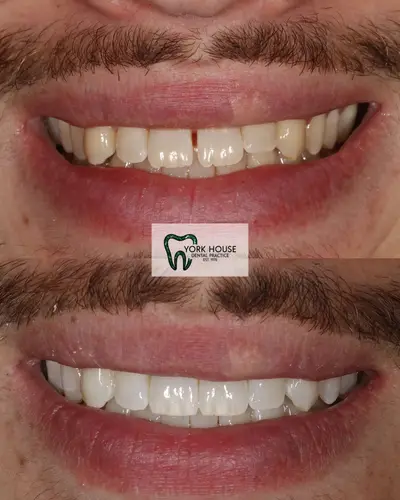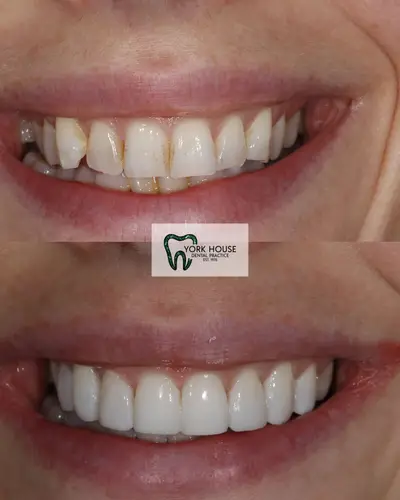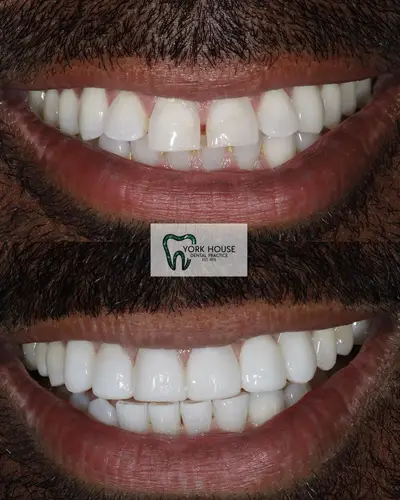
Onlay or crown: which suits your tooth?
Quick answer
Is an onlay or a crown better for a heavily filled tooth?
An onlay covers part of a tooth, including one or more weakened biting points, while a crown covers the prepared tooth more completely.
An onlay may preserve more healthy tooth tissue when enough remains to support it. A crown may be recommended where more extensive coverage is needed. The choice depends on remaining tooth structure, decay, cracks, the bite and how reliably the restoration can be fitted.
| Consideration | Onlay | Crown |
|---|---|---|
| Coverage | Part of the tooth, including weakened cusps | More complete coverage of the prepared tooth |
| Tooth preparation | Can retain more sound tissue in suitable cases | Usually requires preparation around the tooth |
| Suitability | Depends on remaining tissue and reliable retention or bonding | May suit teeth needing more extensive coverage |
| Maintenance | Cleaning, bite checks and reviews | Cleaning around the margin, bite checks and reviews |
| Cost | Individual quote for the tooth and material | Individual quote for the tooth and material |
What is the difference between an inlay, onlay and crown?
An inlay fits within the chewing surface without covering the tooth's raised biting points, called cusps. An onlay extends over one or more cusps to replace or protect weakened areas. A crown surrounds the prepared tooth more fully. These restorations are made to fit the individual tooth; their material and design depend on the clinical situation.
A large filling does not automatically mean that you need a crown. Your dentist should explain whether another filling, an onlay or a crown offers a reasonable way to restore it.
How does the dentist decide which restoration to recommend?
The assessment considers how much healthy tooth remains, where any decay or cracks extend, the existing filling, gum health and the forces on the tooth. X-rays and tests may be needed to assess the tooth and its nerve. Sometimes the full extent of damage becomes clear only after an old restoration is removed.
For example, a tooth with a weakened cusp but substantial sound walls may be considered for an onlay. A tooth with extensive loss around several surfaces may need fuller coverage. These are examples of the decision process, not a diagnosis for every heavily filled tooth. A tooth with a deep crack may have a different prognosis: see cracked-tooth symptoms and assessment.
Does an onlay remove less tooth than a crown?
An onlay can preserve sound surfaces that do not need coverage. It still requires preparation, and conserving tissue is useful only if the final restoration can protect and function on the tooth reliably. The least extensive option is not necessarily suitable for every tooth.
Ask your dentist to show you which parts need protection, which can be retained and why the recommended design is appropriate. A photograph or scan may help explain the plan.
What if the tooth has had root canal treatment?
Root canal treatment is one factor in the decision, alongside the position of the tooth and how much tissue has already been lost. Some teeth need protection over their cusps, but the type of restoration should be individually planned. Read whether a crown is needed after root canal treatment for that specific decision.
How do visits, comfort and aftercare compare?
Treatment commonly involves preparing the tooth and taking a scan or impression, followed by fitting the custom restoration. A temporary restoration may protect the tooth between appointments. The number of visits and the need for local anaesthetic depend on the treatment and the tooth.
Follow the instructions for eating and cleaning around a temporary restoration. After fitting, contact the practice if your bite feels high, the restoration loosens or pain persists or worsens. Both onlays and crowns can chip, loosen or develop decay at their margins; neither makes the underlying tooth immune to future problems.
Is an onlay cheaper or longer-lasting than a crown?
The name alone does not establish either the price or lifespan. Material, laboratory work, complexity and any additional treatment affect the fee. Bite forces, remaining tooth structure, cleaning and future decay affect how long either restoration serves you. Avoid choosing from a lifespan guarantee or headline price alone.
At York House Dental Practice in West Byfleet, ask for an itemised plan explaining the suitable options and what happens if further damage is found. Our crown-cost guide covers crown pricing; an onlay needs its own quotation. You can arrange a damaged-tooth assessment to discuss the alternatives.
Sources and further reading
The NHS Business Services Authority guidance on inlays and onlays explains their coverage and role in restoring damaged teeth. NHS England care-pathway guidance discusses assessment and protective restorations for compromised teeth. These describe general principles; your dentist must assess the appropriate option for your tooth.
Care at York House Dental Practice
Welcoming new patients, families and emergency appointments from West Byfleet, Woking, Weybridge, and across Surrey.